Richmond Hill’s custom homes set high standards. Oak Ridges estates, Bayview corridor properties, established neighborhoods near Yonge – these builds need painters who understand luxury finishes and demanding timelines.We deliver custom home painting services for Richmond Hill’s construction projects. Work directly with builders and homeowners who expect professional results. Our teams coordinate schedules, respect job site rules, complete work that meets inspection standards.Custom builds taught our house painters important lessons. Drywall surfaces require specific prep sequences, woodwork demands multiple coats with proper sanding, walls need attention between applications. Quality materials and systematic approaches produce lasting results.
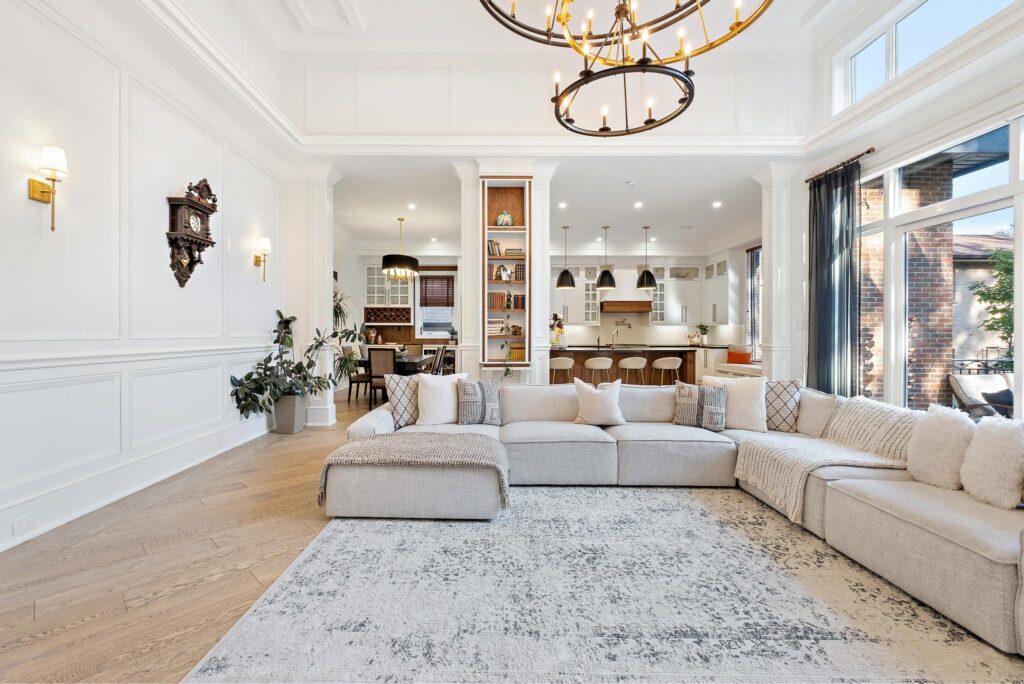
The Three Stages of Custom Home Painting
Painting new construction isn’t comparable to refreshing existing homes. The approach differs entirely – separate timeline, distinct obstacles, heavy coordination requirements. We don’t just walk in on opening day and start coating surfaces. We integrate with builders, coordinate with carpenters and tapers, others too. Our established system reliably produces professional outcomes. Here’s how we handle projects start to finish:
Drywall Priming
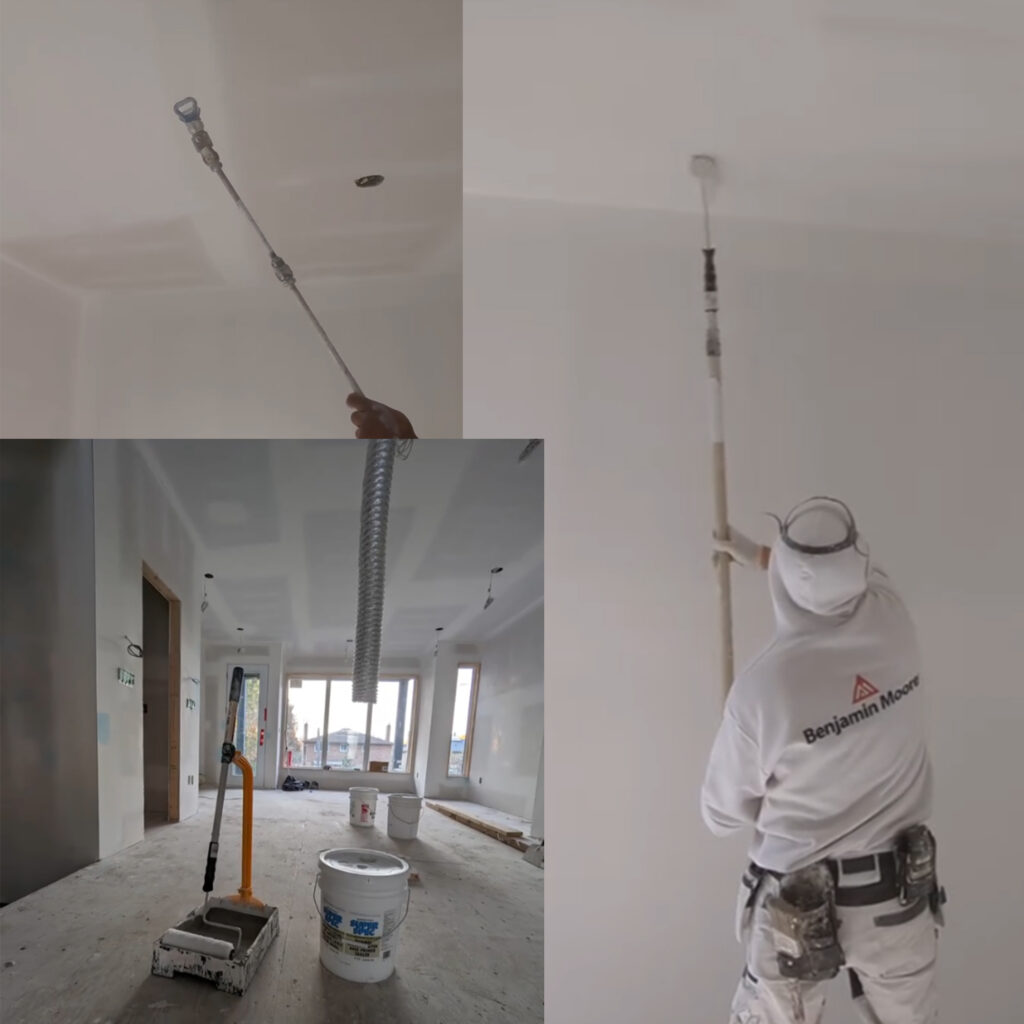
After tapers finish drywall work, our priming stage starts. We spray ceilings then backroll for even distribution. Walls only get rolled – never sprayed at this stage. Why this method? Sites remain construction zones with airborne dust. Spraying walls captures that dust, leaving gritty surfaces. Rolling stays cleaner, moves faster, demands far less masking. Perfect compromise between speed and finish quality.
Initial Painting
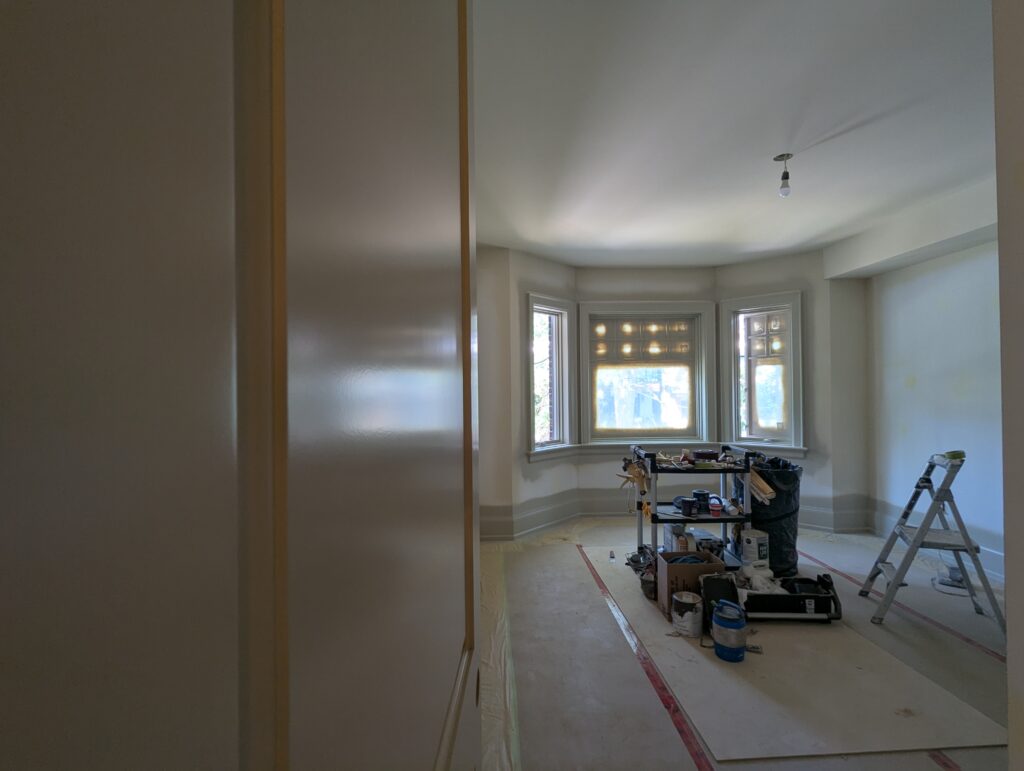
When initial painting starts, we expect completed tile work and finished carpentry. Best scenario includes installed flooring, mounted vanities, hung kitchen cabinets. This prevents subsequent trades from marking up new paintwork. Sites need clearing – no scattered tools, stored materials, or busy workers. Basic cleaning should happen before our arrival.
Initial painting breaks down into four components – surface preparation, spray application work, wall coating, and thorough cleanup.
Preparations
We fill every nail hole, fix all damaged trim and doors. Caulking fills hundreds of seams between woodwork and walls. Windows, tiles, floors all get protected against overspray. Proper preparation demands time.
Spray Painting
Woodwork gets spray primer application, followed by smooth sanding. Second primer layer goes on, more sanding follows. Two finish layers complete the sequence, sanding happens between each. Four complete cycles produce glass-smooth trim surfaces. Doors receive complete spray coverage – fronts, backs, all edge profiles.
Walls Painting, and Clean-Up
Light sanding prepares walls for initial rolled coat. Following the second application, final sanding creates smooth surfaces. Protection materials get removed, windows and floors receive cleaning. Color changes and accent walls show sharp boundaries with zero bleed-through.

Paint Touch Ups
After final trades finish – plumbers, electricians, countertop crews – we come back for touchup work. Any damage from their activities gets corrected. Usually spans 2-4 days based on trade volume and their carefulness.
Wall marks get touched up, scratched trim receives repair, damaged areas get repainted. Stair staining fits perfectly into this phase with no remaining foot traffic. Final inspection with homeowner or builder confirms everything meets expectations.
Getting Started
Looking for a quote on your custom home painting project?
Just visit our contact form and send us your drawings along with any specific details. That’s usually enough for us to give you a basic price estimate. Or if you’d prefer to meet in person, that works too, just let us know!
Looking forward to hearing from you!